

How Delayed Emergency C-Sections Can Lead to Birth Injuries
During childbirth, the line between a routine, joyful delivery and a catastrophic medical crisis can thin out in a matter of seconds. While the human body is remarkably resilient, unexpected complications frequently arise that make a safe vaginal delivery entirely impossible. When these crises strike, an immediate surgical intervention is the only viable pathway to protect the life and health of both the mother and her baby.
When an obstetric team hesitates, miscommunicates, or fails to prepare an operating room quickly enough, a delayed emergency c section can result in permanent, life-altering birth injuries. The physical trauma of an unassisted, stalled delivery or prolonged oxygen deprivation can permanently damage an infant’s brain. Understanding the medical standards of care that govern surgical timelines, the warning signs of fetal distress, and when a delay constitutes actionable clinical negligence is essential for families struggling to understand what went wrong.
The Critical Importance of a Timely Cesarean Delivery
An emergency cesarean section is not a preferred choice; it is a high-stakes, rescue operation. In a normal delivery, the baby is safely insulated inside the amniotic sac, receiving blood and oxygen continuously. However, during an obstetric crisis, the baby’s environmental support systems begin to break down rapidly.
If a medical team permits labor to continue past the point of safety, the physical stress on the infant reaches a breaking point. A delayed emergency c section forces a vulnerable infant to endure prolonged trauma, letting treatable complications cascade into permanent physical or cognitive disabilities.
Medical Standards of Care: The “30-Minute Rule” Explained
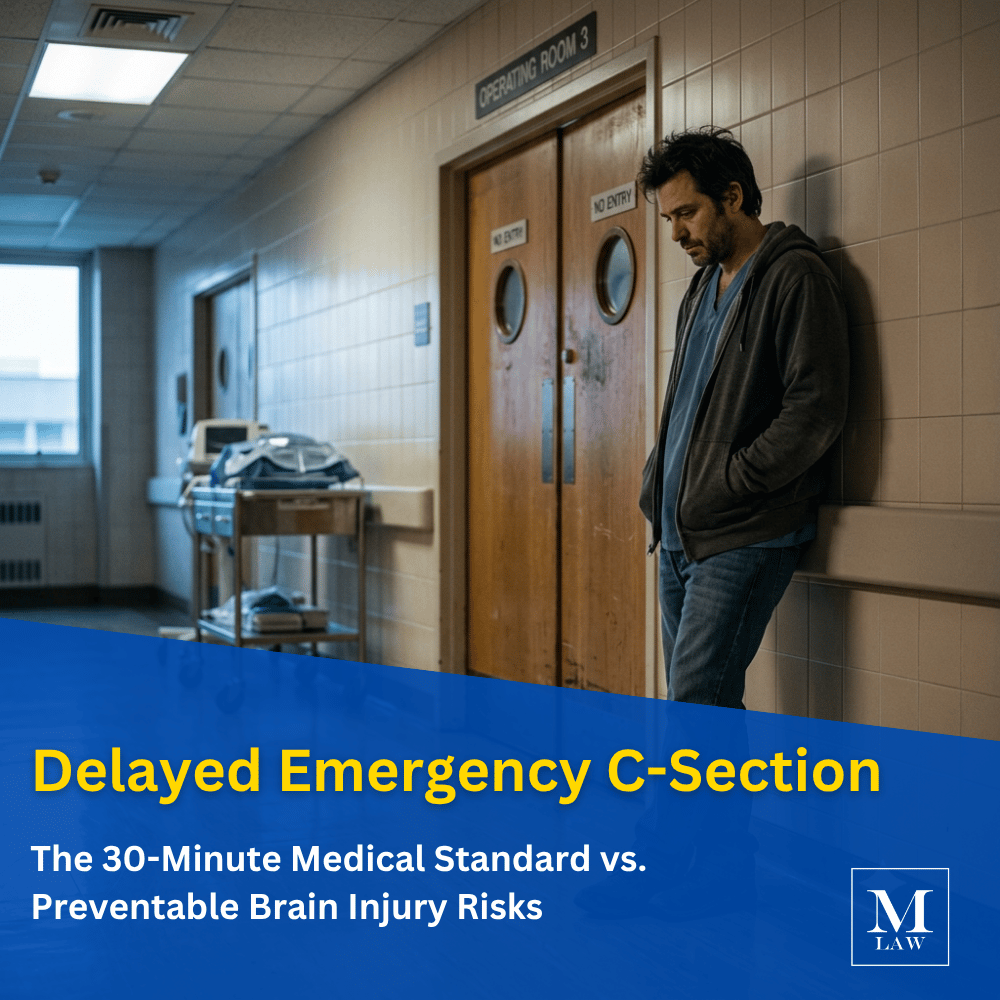
To protect infants from the devastating consequences of delivery room delays, the American College of Obstetricians and Gynecologists (ACOG) and the American Academy of Pediatrics (AAP) have established strict, universal protocols. Under standard medical guidelines, hospitals must possess the staffing, equipment, and structural capabilities to perform an emergency cesarean delivery within 30 minutes of the physician making the decision to operate. This is widely recognized across the medical community as the “decision-to-incision” standard.
While 30 minutes is the upper acceptable limit for standard emergencies, certain hyper-acute scenarios—such as a catastrophic uterine rupture or severe placental detachment—demand an even faster response. In those terrifying moments, a delay of even 10 or 15 minutes can stand between a full recovery and severe, irreversible brain damage.
Warning Signs that Require an Immediate Emergency C-Section
A competent obstetric team must actively look for and immediately interpret the warning signs of fetal and maternal distress. These red flags demand that the medical staff abandon plans for a vaginal birth and prepare the operating room right away.
Non-Reassuring Fetal Heart Rate Tracings
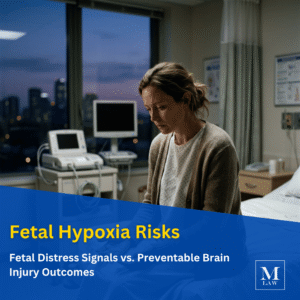
The electronic fetal monitor serves as the baby’s primary voice during labor. Tragic errors occur when a hospital team displays a gross failure to monitor baby during labor. Glaring signs of severe distress include persistent late decelerations, deep variable decelerations, or a complete drop in heart rate baseline (bradycardia). These patterns signal that the baby is in a state of acute fetal hypoxia and can no longer tolerate the pressure of contractions.
Acute Obstetrical Disasters and Mechanical Blocks
Several structural emergencies require immediate surgical intervention to save the infant’s life:
- Placental Abruption: The placenta tears away from the uterine wall before birth, cutting off the baby’s entire blood and oxygen supply.
- Uterine Rupture: The mother’s uterus physically tears open along an old scar line, causing massive internal bleeding and expelling the baby into the abdominal cavity.
- Umbilical Cord Prolapse: The cord slips into the birth canal ahead of the baby, where it is physically crushed, causing severe umbilical cord compression cerebral palsy risks.
Preventable Birth Injuries Caused by Delivery Delays
When a medical team ignores distress signals and delays a necessary surgical intervention, the infant is left trapped in a hostile environment, starved of oxygen.
Hypoxic-Ischemic Encephalopathy (HIE) and Cerebral Palsy
The most common and severe outcome of a delayed emergency c section is Hypoxic-Ischemic Encephalopathy (HIE), a critical brain injury caused by a profound lack of oxygenated blood flow. If a baby’s brain is deprived of oxygen for too long, brain cells begin to die off rapidly. This permanent damage to the motor cortex frequently matures into spastic or athetoid cerebral palsy, stripping the child of their ability to naturally control muscle coordination, speech, balance, and movement.
Severe Infant Organ Damage and Meconium Aspiration
Prolonged oxygen deprivation causes systemic shock, which can result in multi-organ failure involving the child’s kidneys, heart, and lungs. Additionally, extreme physical stress can cause the fetus to pass its first stool (meconium) into the amniotic fluid while still inside the womb. The gasping reflex triggered by hypoxia causes the baby to inhale this toxic material deeply into their lungs, resulting in severe meconium aspiration syndrome, respiratory failure, or persistent pulmonary hypertension.
When a Delayed Emergency C-Section Is Medical Malpractice
It is important to understand that an emergency C-section requirement itself is a natural complication of childbirth. However, the severe injuries that result from a delayed emergency c section are very often the direct product of medical malpractice. Common examples of medical negligence include:
- Failing to recognize or completely ignoring explicit distress patterns on the fetal monitor strips.
- Delaying the call for a surgical intervention because the attending obstetrician is unavailable or managing multiple patients at once.
- A complete lack of qualified anesthesia staff or surgical nurses to quickly prep the operating room.
- Continuing to aggressively administer labor-inducing drugs like Pitocin despite clear evidence that the baby is suffocating.
The financial burden of caring for a child who suffered permanent brain damage due to a delivery delay is astronomical. Families face millions of dollars in expenses for continuous physical rehabilitation, home health aides, specialized speech equipment, and accessible living spaces.
If you suspect your child’s injury was entirely preventable, consulting a dedicated Medical Malpractice Lawyer in NYC gives your family the advocate you need. Independent medical experts can reconstruct your labor timeline using archived hospital logs. If the evidence shows the medical team breached the standard of care by delaying a vital surgical delivery, a legal claim can secure the critical financial compensation your child needs for a lifetime of care, therapy, and support.
Frequently Asked Questions About Delayed Cesarean Deliveries
How long can an emergency C-section safely be delayed?
Under the medical standard of care, an emergency C-section should be performed within 30 minutes of the decision to operate. For acute crises like a uterine rupture or placental abruption, any delay can be catastrophic, and the delivery must happen even faster.
What are the main birth injuries caused by a delayed C-section?
The most severe injuries include Hypoxic-Ischemic Encephalopathy (HIE), cerebral palsy, severe developmental delays, meconium aspiration syndrome, and permanent organ damage caused by prolonged oxygen deprivation.
How do I know if my baby’s C-section was delayed?
Signs of a dangerous delay include a medical team that appeared panicked or disorganized, a prolonged wait for an operating room or anesthesiologist to arrive, or if the fetal heart rate monitors were alarming for an extended period before action was taken.
Can a delayed C-section cause cerebral palsy?
Yes. If a C-section is delayed while a baby is in severe distress, the prolonged lack of oxygen to the brain causes rapid cell death in the motor control centers, leading directly to cerebral palsy.
Is a delayed emergency C-section automatically considered medical malpractice?
It constitutes medical malpractice if the delivery room staff failed to monitor the baby properly, misread clear patterns of fetal distress, or lacked the staff needed to meet the standard 30-minute decision-to-incision window, directly causing the child’s injury.