

Is Erb’s Palsy Permanent? Prognosis, Recovery, and Legal Rights
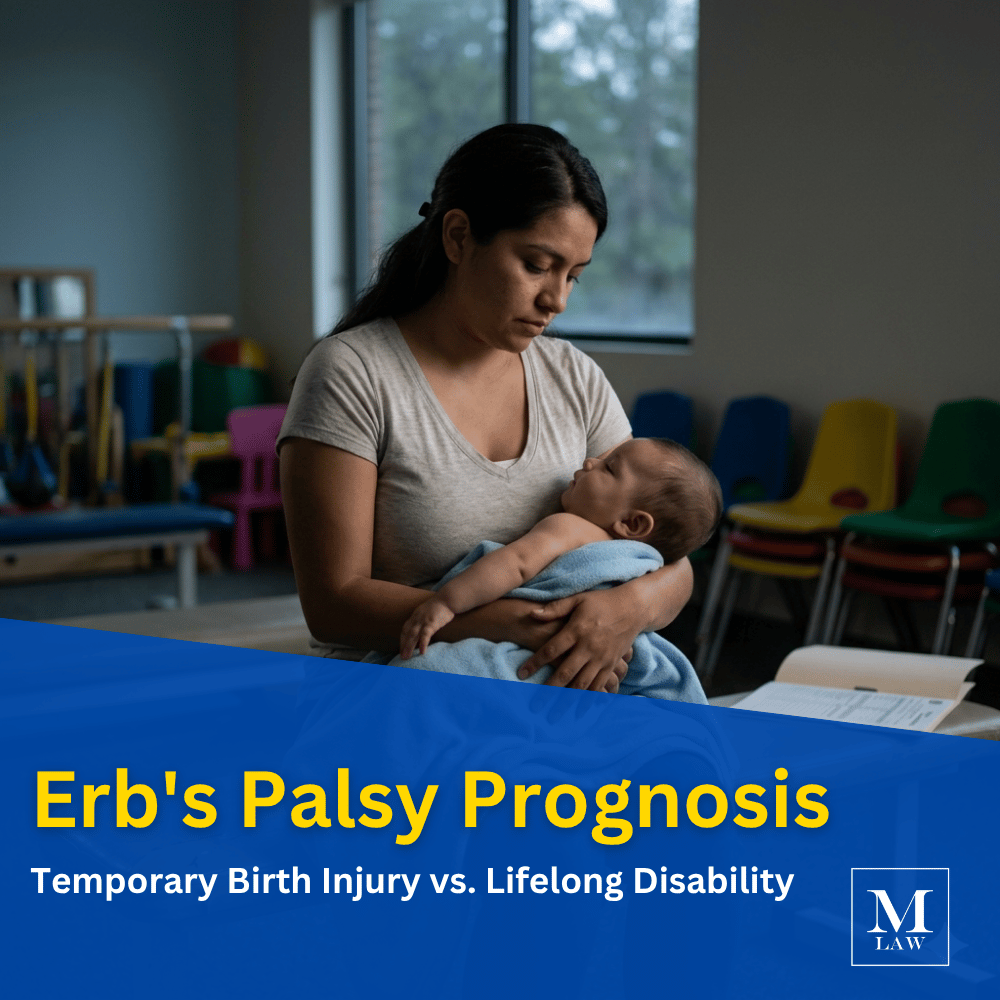
Receiving a birth injury diagnosis can leave parents feeling overwhelmed, anxious, and filled with questions about their child’s long-term future. One of the most urgent questions parents ask our legal and medical teams after a difficult delivery is: is erb’s palsy permanent? The answer to this question is not entirely uniform, as a child’s prognosis depends heavily on the severity of the initial nerve damage sustained during birth.
At Merson Law, we believe that providing families with clear, accurate medical and legal information is essential during this challenging time. While many infants recover fully from this condition within their first year of life, others are left with lifelong physical limitations. This guide explores the factors that determine if the injury will fade or if a family must adapt to a chronic disability.
Understanding the Brachial Plexus Injury
To evaluate whether is erb’s palsy permanent, it is necessary to examine the anatomy of the injury. Erb’s palsy is caused by damage to the brachial plexus—a complex network of nerves located near the neck that controls the movement and sensation of the entire arm, hand, and fingers.
During a difficult delivery, typically involving a complication known as shoulder dystocia, a baby’s shoulder can become stuck behind the mother’s pelvic bone. If the delivering physician pulls too forcefully on the infant’s head or neck to free them, these fragile nerves can be stretched, compressed, or completely torn. The type of nerve trauma dictates the answer to whether the resulting disability is temporary or lifelong.
The Four Types of Nerve Damage: Temporary vs. Lifelong
The underlying pathology of the brachial plexus injury is the primary indicator of whether is erb’s palsy permanent. Medical professionals categorize these injuries into four distinct types, ranging from mild stretching to complete separation from the spinal cord.
1. Neurapraxia (Praxis)
This is the mildest form of brachial plexus injury, involving a temporary stretching of the nerve fibers without any structural tearing. The nerve is shocked or bruised, disrupting the signals sent from the brain to the arm. For families wondering is erb’s palsy permanent in these specific cases, the answer is generally no. Most infants with neurapraxia heal naturally within three to six months through regular pediatric monitoring and gentle physical therapy.
2. Neuroma
A neuroma occurs when the nerve fibers are stretched more severely, resulting in microscopic tears. As the body attempts to heal these tears, scar tissue forms around the damaged nerve. This scar tissue puts pressure on the healthy nerve fibers, blocking or distorting signals to the arm muscles. In these instances, whether is erb’s palsy permanent depends entirely on how effectively physical therapy or specialized nerve decompression surgeries can mitigate the impact of the scar tissue. Some partial weakness may persist into adulthood.
3. Rupture
A rupture is a severe injury where the brachial plexus nerve is completely torn apart, but it remains attached to the spinal cord. A ruptured nerve cannot heal on its own. For a child with a rupture, the answer to is erb’s palsy permanent is yes, unless timely surgical interventions are performed. Microsurgeries, such as nerve grafts or nerve transfers performed within the first three to nine months of life, are required to restore any degree of function to the affected arm.
4. Avulsion
An avulsion is the most catastrophic form of brachial plexus injury. It occurs when the nerve root is completely torn away from the spinal cord itself. Because the nerve has been disconnected at the source, it cannot be reattached or repaired using traditional grafting techniques. For an infant diagnosed with an avulsion, the physical impairment associated with is erb’s palsy permanent, often resulting in lifelong paralysis, sensory loss, and a shortened or underdeveloped arm.
The Role of Early Intervention and Medical Oversight
Because the window for optimal nerve regeneration is narrow, early intervention is critical. If a pediatrician or pediatric neurologist suspects that a child’s condition may slide into the category of is erb’s palsy permanent, they will recommend aggressive treatment plans early on.
- Physical Therapy: Starting within the first few weeks of life, specialized exercises help maintain the arm’s range of motion, preventing muscle atrophy and joint contractures.
- Hydrotherapy: Occupational therapy performed in warm water helps reduce muscle tension, allowing infants to practice moving their affected limbs with less gravity resistance.
- Surgical Consultation: If an infant shows zero signs of bicep flexion or muscle movement by the age of three to six months, a surgical evaluation is mandatory to prevent permanent disability.
When Is Erb’s Palsy Permanent Due to Medical Negligence?
While shoulder dystocia can occur unpredictably, the physical trauma that causes a permanent brachial plexus injury is almost always the result of a medical provider utilizing excessive, unapproved force in the delivery room. When a doctor panics or fails to use standard obstetric maneuvers to safely dislodge the baby’s shoulder, their actions cross the line into medical malpractice.
If your child’s medical records indicate that the delivery team used excessive downward traction on the baby’s head, or if they improperly utilized assistive instruments like forceps or vacuum extractors, the provider may be directly liable for the lifelong hardships your child faces.
If you suspect that your child’s long-term disability was entirely preventable, consulting an experienced Erb’s palsy lawyer in NYC is an essential step toward securing the resources your family will need for specialized lifelong care.
Frequently Asked Questions About the Permanency of Erb’s Palsy
At what age can a doctor determine if a child’s Erb’s palsy is permanent?
A definitive answer regarding whether is erb’s palsy permanent can usually be determined between three and six months of age. If an infant shows substantial spontaneous muscle recovery and bicep function within the first 90 days, the prognosis is highly favorable. However, if there is no improvement by six months, the nerve damage is likely severe (such as a rupture or avulsion), indicating that some form of permanent impairment is probable without surgical intervention.
Can a child still experience limitations if their condition isn’t considered fully permanent?
Yes. Even in cases where the injury is not classified as a total paralysis, a child may still experience chronic, long-term limitations. This can include a diminished grip strength, a noticeably reduced range of motion in the shoulder or elbow, and a discrepancy in arm length, meaning that while not fully paralyzed, the effects of the condition remain somewhat lifelong.
What surgeries are available if the condition appears to be permanent?
If the nerve damage suggests the disability is erb’s palsy permanent, pediatric neurosurgeons can perform advanced procedures. These include nerve grafts, where a healthy nerve is taken from another part of the baby’s body to bridge the torn brachial plexus, and nerve transfers, which route a functioning neighboring nerve into the damaged pathway to stimulate muscle growth.
How does an Erb’s palsy lawsuit help my child if their injury is lifelong?
If the underlying cause of why is erb’s palsy permanent in your child’s case was a delivery room error, a lawsuit provides the financial compensation required to cover specialized medical treatments, repetitive surgeries, adaptive equipment, and intensive physical therapy. It ensures your child has access to the best possible care throughout their entire life.
Final Guidance for Families Facing a Lifetime Disability
Accepting that a birth injury may have a lasting impact on your child’s life is an incredibly difficult emotional hurdle. However, knowing whether is erb’s palsy permanent allows you to pivot from uncertainty to proactive management, ensuring your child receives the surgical and therapeutic support they need to maximize their independence.
If you believe a medical mistake during delivery caused your child’s chronic condition, visit our comprehensive Erb’s Palsy Page to learn more about the medical mechanisms behind these birth injuries. The team at Merson Law is here to help you evaluate your case, hold negligent providers accountable, and fight for your child’s future peace of mind.