

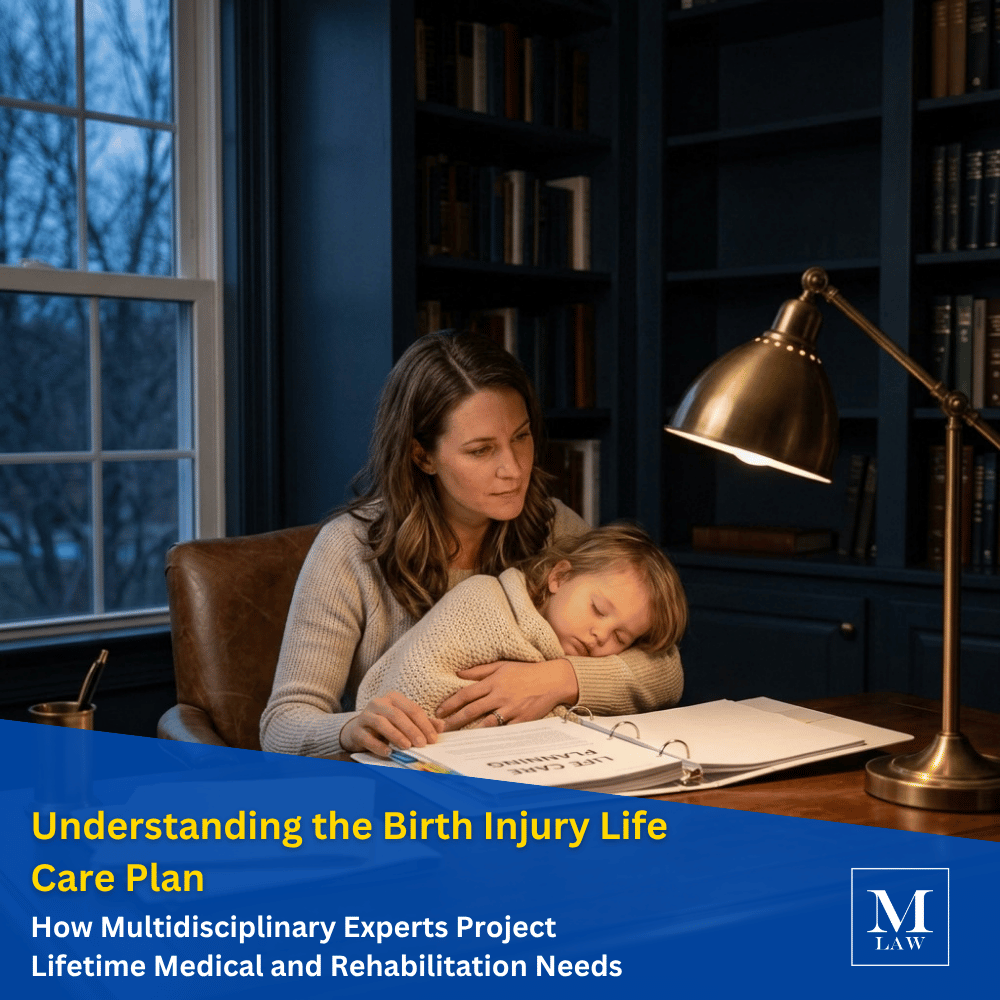

What Is a Life Care Plan in a Birth Injury Case?
When a child suffers a catastrophic birth injury—such as Hypoxic-Ischemic Encephalopathy (HIE), cerebral palsy, or severe brachial plexus paralysis—families are immediately thrust into a complex medical landscape. Managing daily care, coordinating physician visits, and arranging specialized physical therapy can quickly become overwhelming. Beyond the immediate emotional burden lies a pressing long-term question: how will the family afford the continuous medical interventions, specialized technology, and personal support the child will require for decades to come?
In medical malpractice litigation, quantifying these complex, lifetime needs requires far more than rough estimates or educated guesses. Courts, insurance defense teams, and juries rely on a comprehensive, scientifically validated medical roadmap known as a birth injury life care plan. Understanding what a life care plan entails, who creates it, and how it translates a child’s medical diagnosis into a detailed projection of future needs is essential for securing complete financial recovery.
What Is a Life Care Plan and Why Is It Essential?
A life care plan is a dynamic, highly detailed document that outlines all current and future medical, psychological, rehabilitation, and supportive care requirements for an individual who has suffered a catastrophic injury. Originally developed in the field of rehabilitation counseling, life care planning has become a foundational component of complex birth trauma litigation.
The primary objective of a birth injury life care plan is to provide an objective, line-item projection of every service, supply, intervention, and equipment replacement a child will need from the time of assessment through their expected lifespan. Because every child’s neurological and physical potential varies, a life care plan is never a generic template; it is a customized evaluation tailored specifically to the child’s unique diagnostic profile, developmental trajectory, and living environment.
Without a professionally developed life care plan, a family risks severely underestimating the true financial burden of a birth injury. Relying solely on immediate hospital bills or short-term therapy costs ignores the compounding effects of long-term medical inflation, equipment replacement schedules, and the transition into adult care.
Key Multidisciplinary Contributors to a Life Care Plan
Creating an authoritative life care plan requires input from a wide array of specialized professionals. The process is directed by a Certified Life Care Planner (CLCP)—frequently a board-certified physiatrist (physical medicine and rehabilitation physician), pediatric nurse practitioner, or specialized vocational rehabilitation consultant.
To build a comprehensive plan, the life care planner reviews thousands of pages of medical documentation and collaborates directly with a multidisciplinary team of specialists:
Pediatric Neurologists and Physiatrists: Medical specialists who define the child’s neurological prognosis, secondary health risks (such as spasticity or seizure disorders), and anticipated medical procedures or surgeries over time.
Physical, Occupational, and Speech Therapists: Treating therapists who assess functional mobility, fine motor control, feeding safety, and communication needs, providing specific recommendations for weekly therapy hours.
Pediatric Orthopedists and Surgeons: Physicians who project future orthopedic interventions, such as tendon release surgeries, spinal fusion for scoliosis, or hip reconstruction.
Assistive Technology Specialists: Experts who evaluate the child’s physical capabilities to recommend appropriate power wheelchairs, communication boards, and adaptive computer equipment.
Forensic Economists: Financial experts who take the itemized life care plan and calculate the present value of all projected future goods and services, factoring in medical inflation rates and actuarial life expectancies.
Core Components Projected in a Life Care Plan
A thorough birth injury life care plan covers every aspect of an injured child’s daily life, medical treatment, and long-term development. By categorizing needs into distinct operational areas, the plan ensures no vital service is overlooked.
Primary categories evaluated within a life care plan include:
Ongoing Medical Treatment and Surgical Care: Scheduled consultations with pediatric neurologists, orthopedists, pulmonologists, and gastroenterologists, alongside anticipated inpatient hospitalizations, diagnostic imaging (such as routine brain MRIs), and specialized surgical procedures.
Therapeutic Interventions: Lifelong schedules for physical therapy to manage muscle tone, occupational therapy to build daily living skills, speech-language therapy for communication and swallowing safety, and hydrotherapy or hippotherapy.
Assistive Technology and Mobility Equipment: Manual and powered wheelchairs, standing frames, gait trainers, custom orthotics, environmental control units, and speech-generating devices. The plan explicitly factors in replacement cycles as the child grows and as equipment wears out.
Home and Vehicle Accessibility Modifications: Structural changes to the family residence to ensure safety and independence, such as building exterior ramps, widening interior doorways, installing ceiling track hoists, and remodeling bathrooms with roll-in showers. It also projects the periodic purchase and conversion of wheelchair-accessible vans.
Attendant and Skilled Nursing Care: Detailed allocations for in-home caregiving support. Depending on the severity of the disability, this may range from part-time home health aides assisting with bathing and transfer to 24-hour care by Licensed Practical Nurses (LPNs) or Registered Nurses (RNs) for medically fragile children requiring tracheostomy or gastrostomy tube management.
Specialized Education and Vocational Support: Support services required to assist the child within educational environments, including private tutoring, specialized learning aids, or vocational training tailored to their functional abilities.
Routine Medical Supplies and Medications: Ongoing daily supplies such as feeding tube formulas, catheters, incontinence products, seizure medications, and muscle relaxants.
Understanding That Every Child and Case Is Unique
A fundamental principle of life care planning is that no two children with the same general diagnosis will have identical plans. For example, two children diagnosed with spastic cerebral palsy following oxygen deprivation may have vastly different functional capabilities, cognitive abilities, and family support systems.
One child may require mild adaptive equipment and weekly outpatient physical therapy, while another child with spastic quadriplegia may require round-the-clock skilled nursing care, frequent orthopedic surgeries, and complete environmental modifications. Life care planners conduct thorough home visits and personal evaluations to ensure the proposed plan accurately reflects the individual child’s specific reality, rather than applying rigid, standardized formulas.
Frequently Asked Questions About Birth Injury Life Care Plans
How early in a birth injury lawsuit is a life care plan created?
Life care plans are typically commissioned during the discovery phase of litigation, once the child’s medical condition has stabilized enough for pediatric specialists to establish a clear long-term prognosis. While preliminary assessments can begin early, finalizing the plan often occurs around age two or three, when developmental milestones can be accurately evaluated.
Can the defense hire their own life care planner?
Yes. In medical malpractice litigation, defense attorneys routinely retain their own life care planners to review the child’s records and offer competing, often more conservative, estimates of future care needs. Having a thoroughly researched, expert-backed plan created by reputable medical authorities is essential for withstanding defense cross-examination.
How does a life care plan work with the New York Medical Indemnity Fund?
In New York birth injury cases involving neurological injuries, approved future medical expenses projected in a life care plan are paid out through the state’s Medical Indemnity Fund (MIF). The life care plan serves as the primary medical evidentiary baseline during settlement negotiations or trial to demonstrate the scope of enrollment and future care funding required.
Merson Law: Securing the Lifetime Care Your Child Deserves
Ensuring that a child injured by medical malpractice has access to world-class medical treatment, therapy, and adaptive technology for the rest of their life requires rigorous legal preparation and top-tier medical expertise. Hospital legal teams and insurance carriers work tirelessly to minimize future care projections, making an authoritative, detailed life care plan vital to protecting your child’s future.
Merson Law, PLLC has established a national reputation for securing multi-million dollar verdicts and settlements for families navigating severe birth trauma. Our legal team collaborates with premier medical authorities, certified life care planners, and forensic economists to build comprehensive care plans that reflect every detail of your child’s long-term needs.
If your child was diagnosed with cerebral palsy, HIE, or a severe birth injury, our attorneys are ready to evaluate your legal options and help you build a secure foundation for the future.