

Delayed Disclosure in Childhood Sexual Abuse Cases
Many survivors of childhood sexual abuse do not come forward until years or even decades later. This is known as delayed disclosure, and it is one of the most common realities in childhood sexual abuse cases.
Delayed disclosure does not mean the abuse did not happen. It does not mean the survivor is less credible. It does not mean the abuse was less serious. In many cases, delayed disclosure reflects the deep trauma, fear, confusion, shame, and institutional pressure survivors experience after being abused as children.
At Merson Law, we represent survivors in institutional sexual abuse cases involving churches, schools, youth organizations, clergy, boarding schools, and other institutions that failed to protect children. If you are only now beginning to speak about abuse that happened years ago, you are not alone.
Delayed disclosure means a survivor does not tell someone about childhood sexual abuse immediately after it happens. Some survivors disclose years later. Others wait decades. Some never formally report the abuse at all until they contact a lawyer, therapist, family member, law enforcement agency, or institution later in life.
In childhood sexual abuse cases, delayed disclosure is common because children often do not have the words, safety, emotional support, or power needed to explain what happened to them.
A child may know something was wrong but may not understand the abuse. A child may feel responsible, afraid, ashamed, or threatened. A child may also believe that no one will believe them, especially when the abuser is a trusted adult, teacher, priest, coach, caregiver, doctor, or authority figure.
There is no single reason survivors delay disclosure. Every survivor’s experience is different. However, many survivors wait because of:
- Fear of not being believed
- Shame or self blame
- Confusion about what happened
- Fear of punishment or retaliation
- Pressure from family, school, church, or community members
- Dependence on the person who committed the abuse
- Fear of hurting loved ones
- Trauma responses that make disclosure difficult
- Belief that too much time has passed
Many survivors also grew up in environments where they were taught to trust institutions and authority figures without question. When abuse happens inside a trusted institution, such as a church, school, youth organization, boarding school, foster care setting, or medical facility, it can be even harder for a child to speak.
Childhood sexual abuse can affect how survivors remember, process, and describe what happened.
Some survivors remember specific details clearly. Others remember pieces of what happened, such as locations, sounds, feelings, time periods, or certain people. Some survivors avoid thinking about the abuse for years because the memory is too painful or overwhelming.
Trauma can affect:
- Memory
- Trust
- Relationships
- Emotional regulation
- Mental health
- Substance use
- Self worth
- Willingness to contact an attorney
A survivor does not need to have every detail perfectly organized before contacting Merson Law. A confidential review can help determine what information may matter.
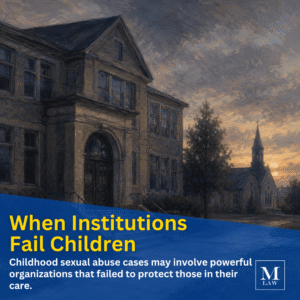
Delayed disclosure is especially common when abuse involves a trusted institution.
A child may feel trapped if the person who committed the abuse is connected to:
- A church
- A school
- A youth organization
- A boarding school
- A foster care setting
- A hospital or medical facility
- A respected community organization
Institutional abuse often creates a second layer of betrayal. Survivors may not only be processing the abuse itself, but also the failure of adults and organizations that were supposed to protect them.
That is why institutional sexual abuse claims often examine what the organization knew, what it ignored, what it concealed, and whether it failed to protect children.
Delayed disclosure does not automatically mean there is no legal claim. Many childhood sexual abuse cases involve delayed reporting. The legal review may depend on:
- When the abuse happened
- Where the abuse happened
- Who was involved
- Whether the survivor was under 18
- Whether an institution may be responsible
- Whether others reported similar conduct
- Whether there were prior warning signs
- Whether the law allows the claim to proceed
If you are unsure whether too much time has passed, do not assume the answer is no before speaking confidentially with an attorney.
Many survivors never reported childhood sexual abuse to police, a school, a church, a parent, or another authority figure when they were younger. That does not automatically mean there is no case.
Merson Law may review:
- Whether anyone else reported similar abuse
- Whether the institution had prior complaints
- Whether there were warning signs adults ignored
- Whether the institution failed to supervise children
- Whether records, witnesses, reports, or public findings exist
- Whether applicable law may still allow a claim
You do not need to have reported the abuse years ago before contacting Merson Law now.
Delayed disclosure is especially important in Rhode Island childhood sexual abuse cases because many survivors abused in institutional settings may have believed for years that they no longer had legal options.
Merson Law is currently reviewing Rhode Island childhood sexual abuse claims involving institutions such as churches, schools, Catholic institutions, boarding schools, youth organizations, and other entities responsible for child safety.
For broader information, visit our page on Rhode Island childhood sexual abuse lawsuits.
For timing and statute questions, visit our page on whether you can still sue for childhood sexual abuse in Rhode Island.
Frequently Asked Questions About Delayed Disclosure in Childhood Sexual Abuse Cases
Yes. Many survivors do not disclose childhood sexual abuse until years or decades later. Delayed disclosure is common and does not mean a survivor should be dismissed or disbelieved.
Survivors may wait because of trauma, fear, shame, confusion, family pressure, institutional pressure, fear of not being believed, or because they were too young to understand what happened at the time.
Possibly. Many survivors never reported abuse when they were younger. Legal options may depend on the facts of your case, who was involved, whether an institution may be responsible, and how the law applies.
You do not need to remember every detail before contacting Merson Law. Many survivors remember partial details, such as a location, institution, approximate year, role of the person involved, or the way the abuse affected them.
No. Delayed disclosure is widely recognized in childhood sexual abuse cases. Survivors often need time, safety, support, or adulthood before they can describe what happened.
Yes. Communications with Merson Law regarding potential representation are confidential. Submitting a form does not obligate you to take legal action.
Helpful Links
- For broader information, visit our page on Rhode Island childhood sexual abuse lawsuits.
- For timing and statute questions, visit our page on whether you can still sue for childhood sexual abuse in Rhode Island.
- For Catholic Church specific information, visit our page on Rhode Island Catholic Church sexual abuse lawsuits.
- For Diocese specific information, visit our page on Diocese of Providence sexual abuse claims.
- For St. George’s School specific information, visit our page on St. George’s School sexual abuse lawsuits.
Speak With Merson Law Confidentially
If you disclosed childhood sexual abuse years later, or if you have never disclosed it before, Merson Law can confidentially review whether you may still have legal options.
You do not need to know whether you have a case before contacting us. You can start by sharing what you remember and what institution, person, or location may have been involved.