

Can Failure to Monitor a Baby During Labor Cause Birth Injuries?
The process of labor and delivery represents a highly volatile physiological window for an unborn child. As uterine contractions compress the placenta and umbilical cord, the baby’s oxygen supply is naturally restricted and restored in rhythmic intervals. To ensure the infant is safely tolerating this immense physical stress, modern labor rooms rely completely on electronic fetal monitoring equipment to act as the baby’s voice.
When a labor and delivery team displays an ongoing failure to monitor baby during labor, that voice is effectively silenced. Missing subtle changes in an infant’s cardiac tracing can mean the difference between a safe delivery and a catastrophic, lifelong disability. Understanding how a failure to monitor baby during labor leads to preventable birth injuries helps parents uncover whether their child’s developmental struggles were caused by an unaddressed delivery room emergency.
The Critical Role of Electronic Fetal Monitoring in the Delivery Room
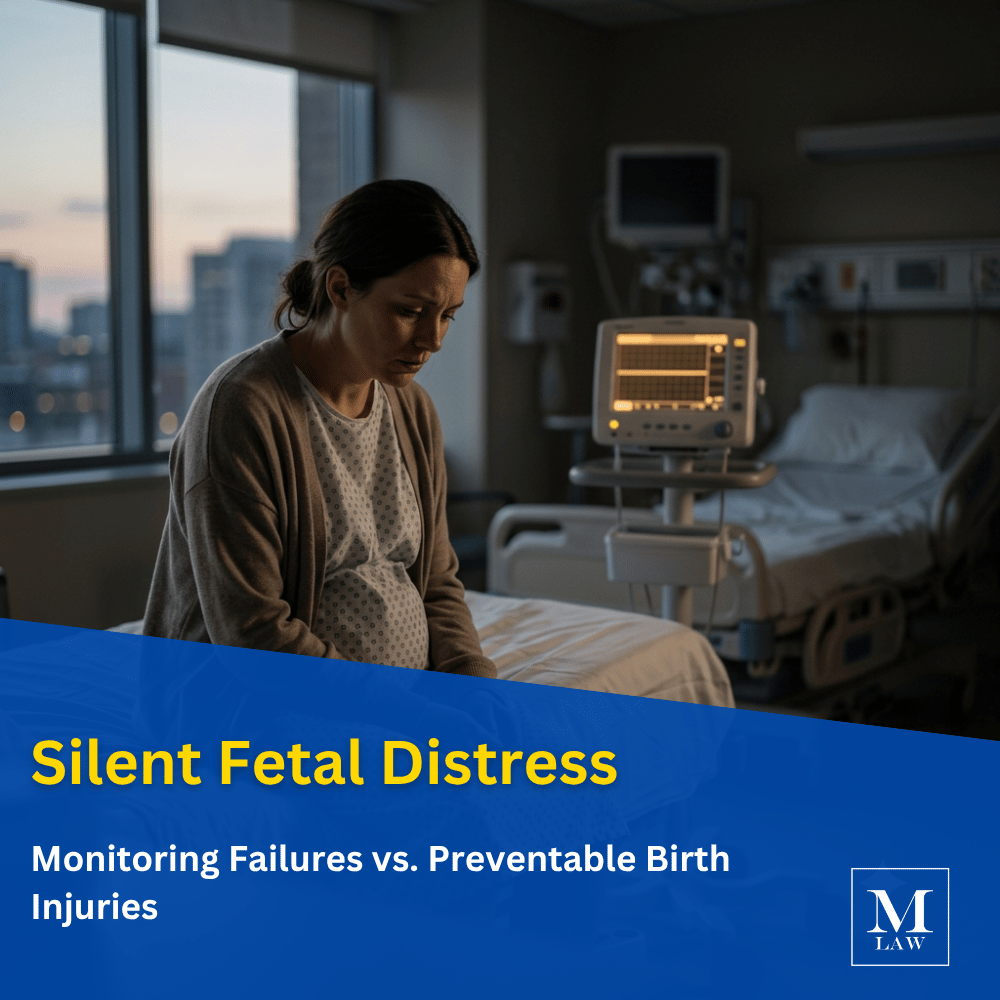
In modern obstetrics, electronic fetal monitoring (EFM) is the standard tool used to evaluate fetal well-being during childbirth. Belts containing specialized sensors are placed across the mother’s abdomen, or an electrode is attached directly to the baby’s scalp. These sensors track two critical metrics simultaneously: the frequency and intensity of the mother’s uterine contractions, and the baby’s instantaneous heart rate response.
This constant stream of data prints out or displays digitally as a continuous fetal monitoring strip. Obstetricians and labor nurses are explicitly trained to read these graphs in real time. The monitor acts as an early warning system, notifying clinicians the exact moment a baby’s oxygen reserves are running low so they can alter the delivery strategy before tissue damage occurs.
How Failure to Monitor Baby During Labor Leads to Preventable Injuries
A failure to monitor baby during labor rarely happens because the equipment breaks down. Instead, it is almost exclusively a failure of human vigilance and clinical interpretation. When staff members leave a laboring mother unattended for long intervals, misinterpret dangerous patterns, or silence alarm systems, the results are devastating.
Missing the Warning Signs of Fetal Distress
When a baby’s physiological coping mechanisms begin to fail, the fetal heart monitor displays explicit signs of fetal distress. If nurses fail to recognize these patterns, the baby remains trapped in an increasingly hostile environment. Prolonged exposure to stressful contractions without medical intervention converts a manageable delivery complication into severe, irreversible trauma.
Delayed Response to Oxygen Deprivation and Hypoxia
As a child undergoes unmonitored distress, their blood oxygen levels plummet, leading to systemic hypoxia. If the medical team is not actively tracking the monitoring strips, they will miss the critical window to perform an emergency C-section. Leaving a baby unmonitored while they are actively starving for oxygen allows cellular degradation to spread rapidly across the brain.
Key Warning Signs and Fetal Heart Rate Tracings to Watch For
Fetal heart monitoring strips are classified into three distinct categories based on risk. Medical professionals must immediately recognize specific dangerous deviations from a normal baseline heart rate (which typically ranges between 110 and 160 beats per minute).
Late Decelerations and Loss of Heart Rate Variability
The most alarming warning signs on a monitoring strip include:
- Late Decelerations: Drops in the baby’s heart rate that occur after a uterine contraction has peaked. This indicates the placenta is no longer delivering adequate oxygen.
- Loss of Variability: A flat, unvarying heart rate line showing that the baby’s central nervous system is becoming too exhausted to regulate its own cardiovascular system.
- Prolonged Bradycardia: A sudden, sustained drop in the fetal heart rate below 110 beats per minute that lasts for several minutes, indicating an acute emergency like an umbilical cord prolapse.
Clinical Reality: A single late deceleration warrants immediate position adjustments and oxygen for the mother. A persistent pattern of late decelerations combined with a loss of variability requires an immediate, emergency delivery to save the child from permanent harm.
Preventable Birth Injuries Caused by Inadequate Monitoring
When an ongoing failure to monitor baby during labor occurs, the infant can sustain life-altering physical and neurological damage. The most common and severe outcome is a permanent newborn brain injury known as Hypoxic-Ischemic Encephalopathy (HIE), which frequently matures into cerebral palsy. Additionally, prolonged, unmonitored struggle in the birth canal increases the risk of severe birth trauma, including fractures, internal organ damage, and deep brain bleeds caused by physical exhaustion and compression.
Establishing Medical Malpractice for Monitoring Failures
Hospitals are legally bound to provide a specific, high standard of care to every laboring patient. This standard explicitly dictates how often a fetal monitor must be reviewed based on whether the labor is low-risk or high-risk (such as deliveries involving synthetic induction medications like Pitocin).
If your child suffered a permanent birth injury because the medical team turned off monitor alarms, ignored flatlining heart rates, or delayed a necessary C-section, it constitutes clear clinical negligence. The financial impact of managing a permanent neurological disorder is immense, requiring continuous specialized therapies, around-the-clock nursing care, and extensive home modifications.
Consulting a dedicated Medical Malpractice Lawyer in NYC allows independent obstetric experts to carefully reconstruct your labor timeline using saved electronic monitor data. Forcing a negligent hospital to take accountability ensures your child receives the essential financial support required to cover their medical and developmental needs for the rest of their life.
Frequently Asked Questions About Fetal Monitoring Failures
What qualifies as a failure to monitor baby during labor?
It occurs when a medical team fails to apply fetal monitoring equipment properly, ignores or misinterprets signs of fetal distress on the monitoring strips, fails to chart heart rate patterns regularly, or ignores monitor alarms.
Can a failure to monitor baby during labor cause permanent brain damage?
Yes. If a baby’s heart rate drops or becomes unstable due to oxygen deprivation and the staff fails to notice, the prolonged lack of oxygen can lead directly to Hypoxic-Ischemic Encephalopathy (HIE) and permanent brain damage.
How do doctors know if a birth injury was caused by a monitoring failure?
Legal and medical experts can review the archived electronic data from the fetal monitoring machine. The machine saves a permanent digital log of the baby’s heart rate and the mother’s contractions, showing exactly when the distress started and how long it was ignored.
What should labor nurses do if the fetal monitor shows signs of distress?
Nurses must initiate intrauterine resuscitation maneuvers immediately. This includes changing the mother’s physical position, administering IV fluids, providing supplemental oxygen, stopping labor-inducing drugs like Pitocin, and immediately notifying the attending obstetrician.
Is an injury from a failure to monitor automatically medical malpractice?
If the saved monitoring logs prove the baby was in clear, prolonged distress and the medical team failed to notice or act according to standard protocol, it provides incredibly strong grounds for a medical malpractice lawsuit.