

Can Failure to Respond to Fetal Distress Cause Brain Damage?
The arrival of a new baby should be a time of celebration, but when complications arise during labor and delivery, the environment can instantly shift. During childbirth, medical professionals are completely responsible for tracking the well-being of both the mother and the unborn child. Modern labor wards rely heavily on continuous electronic fetal monitoring to detect subtle changes in a baby’s physiological status.
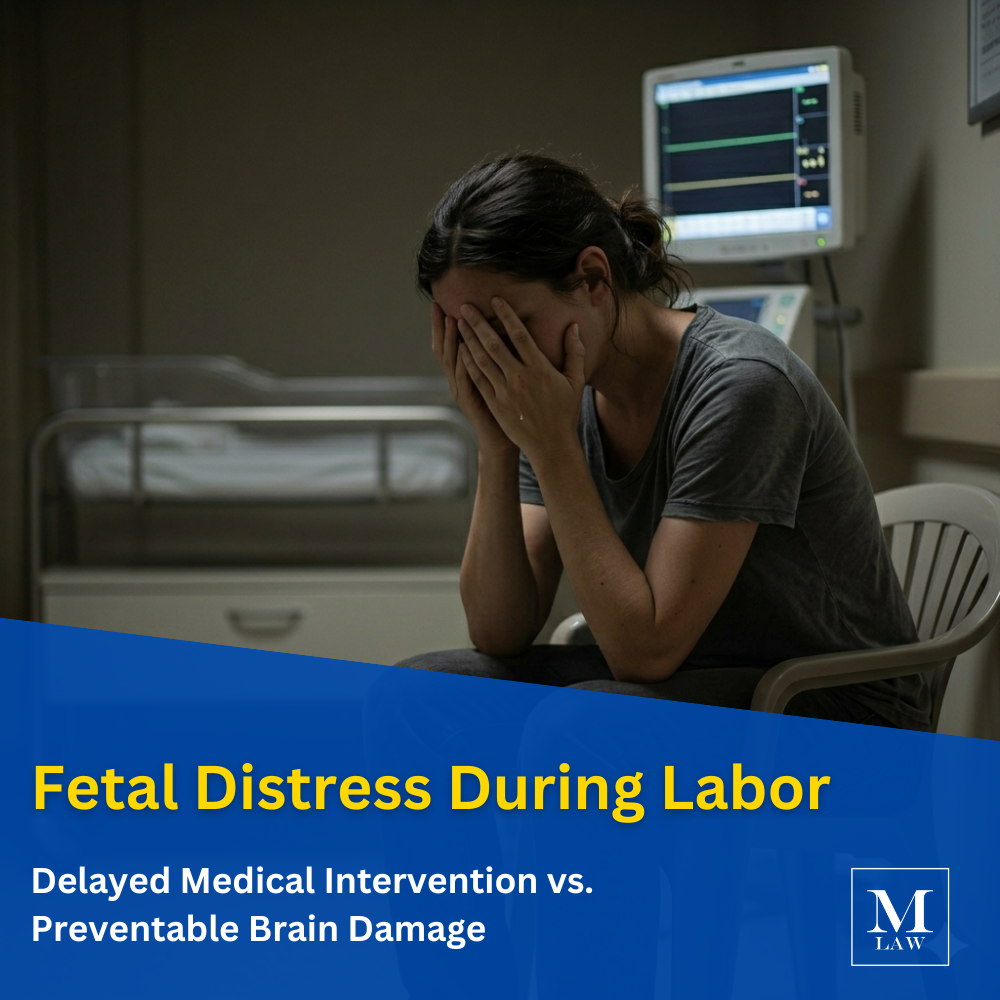
When a delivery team exhibits a failure to respond to fetal distress, a completely manageable complication can transform into a permanent tragedy. If a doctor, nurse, or midwife fails to recognize or act upon dangerous patterns on a heart rate monitor, the consequences are swift. A delayed response can cut off a baby’s oxygen supply, leading directly to irreversible brain damage. Understanding how a failure to respond to fetal distress leads to preventable birth injuries is crucial for families seeking answers and accountability.
What is Fetal Distress and How Do Doctors Monitor It?
Fetal distress is a broad clinical term used to describe a situation where an unborn baby is experiencing an insufficient oxygen supply during labor or delivery. Because the baby cannot communicate directly, the medical team must infer their well-being by closely analyzing the fetal heart rate pattern. A normal, reassuring fetal heart rate typically ranges between 110 and 160 beats per minute, fluctuating slightly with contractions.
Medical teams track these vital signs using electronic fetal monitoring strips. Signs that a baby is in distress and requires immediate attention include:
- Severe Bradycardia: A sustained drop in the baby’s heart rate below 110 beats per minute.
- Sustained Tachycardia: An abnormally high heart rate above 160 beats per minute, which often indicates early distress or infection.
- Late Decelerations: Drops in the baby’s heart rate that occur after a uterine contraction has peaked, signaling that the placenta is failing to deliver enough oxygen.
- Loss of Variability: A smoothing or flattening out of the heart rate line, showing that the baby no longer has the neurological resilience to handle the stress of labor.
When these patterns appear on a monitor, they represent an urgent medical emergency.
The Direct Link: Failure to Respond to Fetal Distress and Infant Brain Damage
A baby’s brain requires a constant, uninterrupted flow of oxygenated blood. During a normal contraction, oxygen delivery drops slightly but recovers quickly. However, when an underlying complication interferes with the placenta or umbilical cord, the oxygen drop is severe and sustained. A prolonged failure to respond to fetal distress directly causes permanent, irreversible brain damage through a rapid cascade of physiological degradation.
Birth Asphyxia and Hypoxic-Ischemic Encephalopathy (HIE)
When a medical team allows labor to continue despite clear signs of trouble, the baby suffers from birth asphyxia (prolonged oxygen deprivation). Within minutes of acute oxygen deprivation, a baby’s brain cells begin to fail.
If birth asphyxia is left unaddressed due to a failure to respond to fetal distress, it directly evolves into a severe condition called Hypoxic-Ischemic Encephalopathy (HIE). HIE refers to widespread brain damage caused by a combination of limited oxygen and reduced blood flow to vital brain tissues.
Critical Medical Fact: The brain cells of a newborn cannot regenerate once they are destroyed. Every single minute that a medical team delays an intervention, the scope of the resulting brain damage expands across the child’s cerebral cortex.
Delayed Intervention in Labor: When Is It Medical Malpractice?
Not every delivery complication is preventable, but a medical team’s failure to respond to fetal distress in a timely manner constitutes a direct breach of the medical standard of care. When a baby shows signs of oxygen deprivation, the standard of care requires medical providers to perform intrauterine resuscitation maneuvers. This includes shifting the mother’s position, administering oxygen, infusing IV fluids, or immediately turning off labor-inducing drugs like Pitocin.
If these initial steps fail to stabilize the baby’s heart rate patterns, the medical team must prepare for and execute an immediate emergency Cesarean section (C-section). Medical malpractice occurs when unnecessary delays break this chain of care.
Common Examples of Delayed Intervention During Delivery
- Misreading or Ignoring Monitor Strips: Nurses or doctors failing to properly interpret a non-reassuring heart rate pattern, or missing the warnings entirely because they are managing too many patients.
- Failure to Escalate: Hospital staff noticing an abnormal heart rate pattern but delaying calling the attending obstetrician or a specialist to the delivery room.
- Delayed Emergency C-Sections: Taking an unreasonable amount of time—sometimes hours instead of minutes—to move a patient into an operating room once a C-section is ordered.
- Defective Equipment: Failing to properly maintain or calibrate fetal monitoring alarms, causing the delivery team to miss critical indicators of oxygen loss.
Long-Term Impact: Cerebral Palsy and Lifelong Care Needs
When a medical provider’s failure to respond to fetal distress leads to severe HIE, the long-term developmental path of the child is permanently altered. The specific nature of the child’s lifelong disability depends heavily on which regions of the brain suffered the worst oxygen deprivation.
The most common permanent outcome of severe birth asphyxia is Cerebral Palsy (CP). Cerebral Palsy is a group of permanent neurological disorders that impact a child’s motor skills, muscle tone, movement, and balance. In addition to CP, children who survive a severe failure to respond to fetal distress may struggle with:
- Cognitive impairments and severe learning disabilities.
- Incurable seizure disorders or epilepsy.
- Spasticity, muscle weakness, or a complete inability to walk.
- Severe speech delays, vision loss, or hearing impairments.
A child dealing with these profound challenges will often require around-the-clock medical attention, physical therapy, specialized educational accommodations, and expensive home modifications for the rest of their life.
Legal Recourse for Failure to Respond to Fetal Distress in NYC
Learning that your child’s lifelong cognitive or physical disability could have been entirely prevented if a medical team had simply followed basic monitoring protocols is a devastating reality. The financial burden of managing a severe birth injury can quickly overwhelm a family, leaving parents feeling incredibly isolated and exhausted.
If your child suffered brain damage because medical professionals ignored clear warning signs on a monitor strip, you do not have to carry this burden alone. Building a successful birth injury case requires reviewing highly detailed fetal monitoring logs, hospital timelines, and complex medical charts. Consulting an experienced Cerebral Palsy Lawyer in NYC or a dedicated Medical Malpractice Lawyer in NYC ensures your family has the resources to investigate the delivery. A skilled attorney can help you hold the negligent hospital accountable, securing the financial compensation required to cover your child’s lifelong medical, therapeutic, and adaptive care needs.
Frequently Asked Questions About Fetal Distress and Brain Damage
What happens if doctors ignore a failure to respond to fetal distress during labor?
If a hospital team demonstrates a failure to respond to fetal distress, the baby is left in a state of prolonged oxygen deprivation. This lack of oxygen causes birth asphyxia, which can kill brain cells within minutes and lead directly to permanent brain damage, neurological disorders, or even stillbirth.
How quickly can a failure to respond to fetal distress cause permanent brain damage?
While every child’s physical resilience varies, irreversible brain cell death can begin within minutes of a total oxygen blockage. Medical guidelines generally dictate that if intrauterine resuscitation fails to fix an abnormal heart rate, an emergency C-section should be performed within 30 minutes to minimize the risk of severe brain damage.
Can a baby fully recover from a failure to respond to fetal distress?
A baby can recover fully if the period of distress was brief and the medical team intervened quickly before severe oxygen deprivation occurred. However, if there was a prolonged failure to respond to fetal distress that culminated in moderate to severe Hypoxic-Ischemic Encephalopathy (HIE), the resulting brain damage is permanent.
Is a failure to respond to fetal distress always a valid ground for a medical malpractice lawsuit?
It constitutes medical malpractice if the medical team failed to act in accordance with accepted medical standards. If the monitor strips clearly displayed dangerous heart rate decelerations and the team delayed an emergency delivery without a valid medical reason, this failure to respond to fetal distress provides strong grounds for a lawsuit.
What are the early signs that a newborn suffered brain damage from a failure to respond to fetal distress?
Immediate signs at birth include an incredibly low APGAR score, a pale or blue skin discoloration, limp muscle tone, a weak or absent cry, and a lack of spontaneous breathing. In the days immediately following birth, the infant may experience seizures, extreme lethargy, or severe feeding and swallowing difficulties.